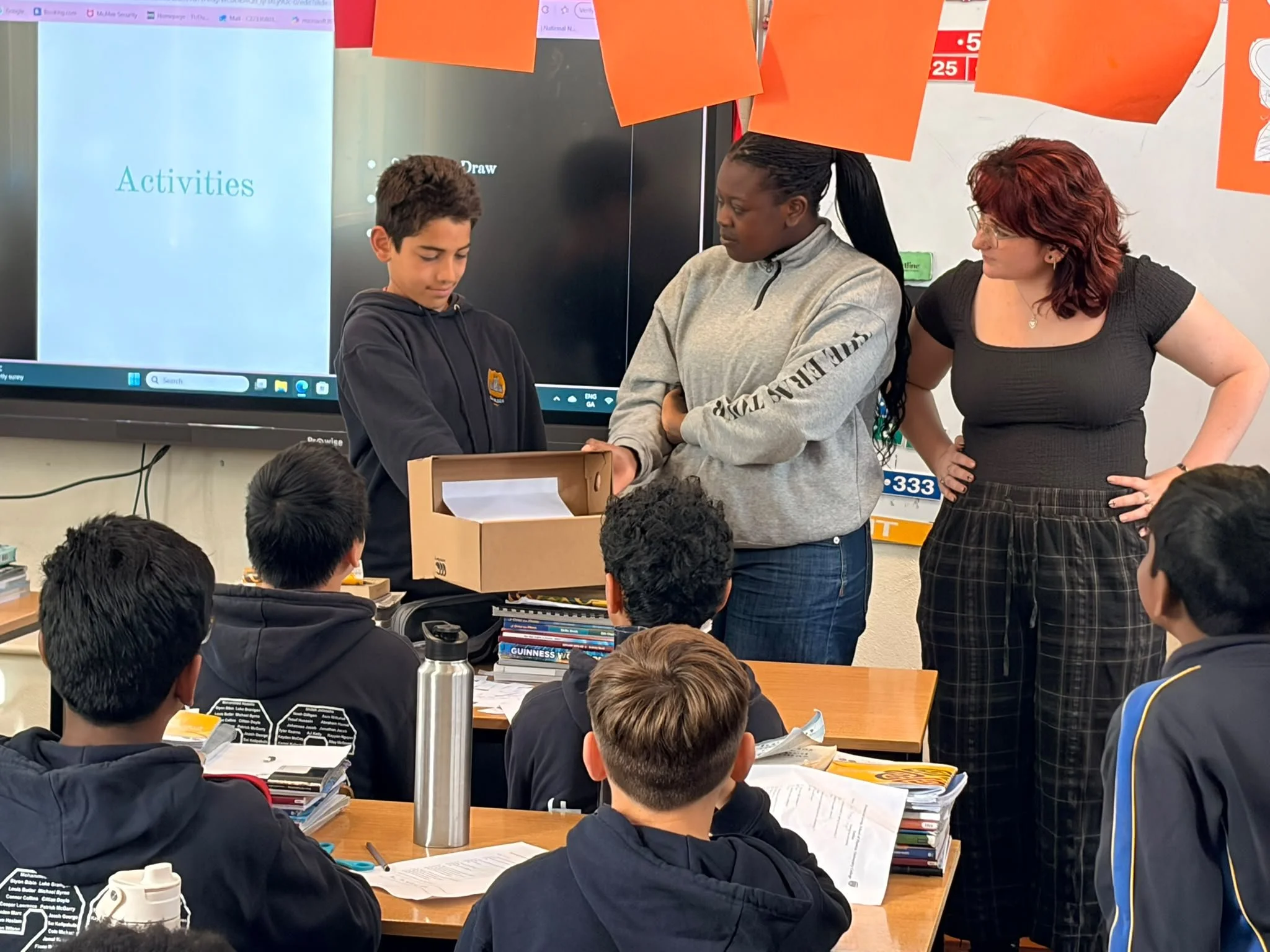
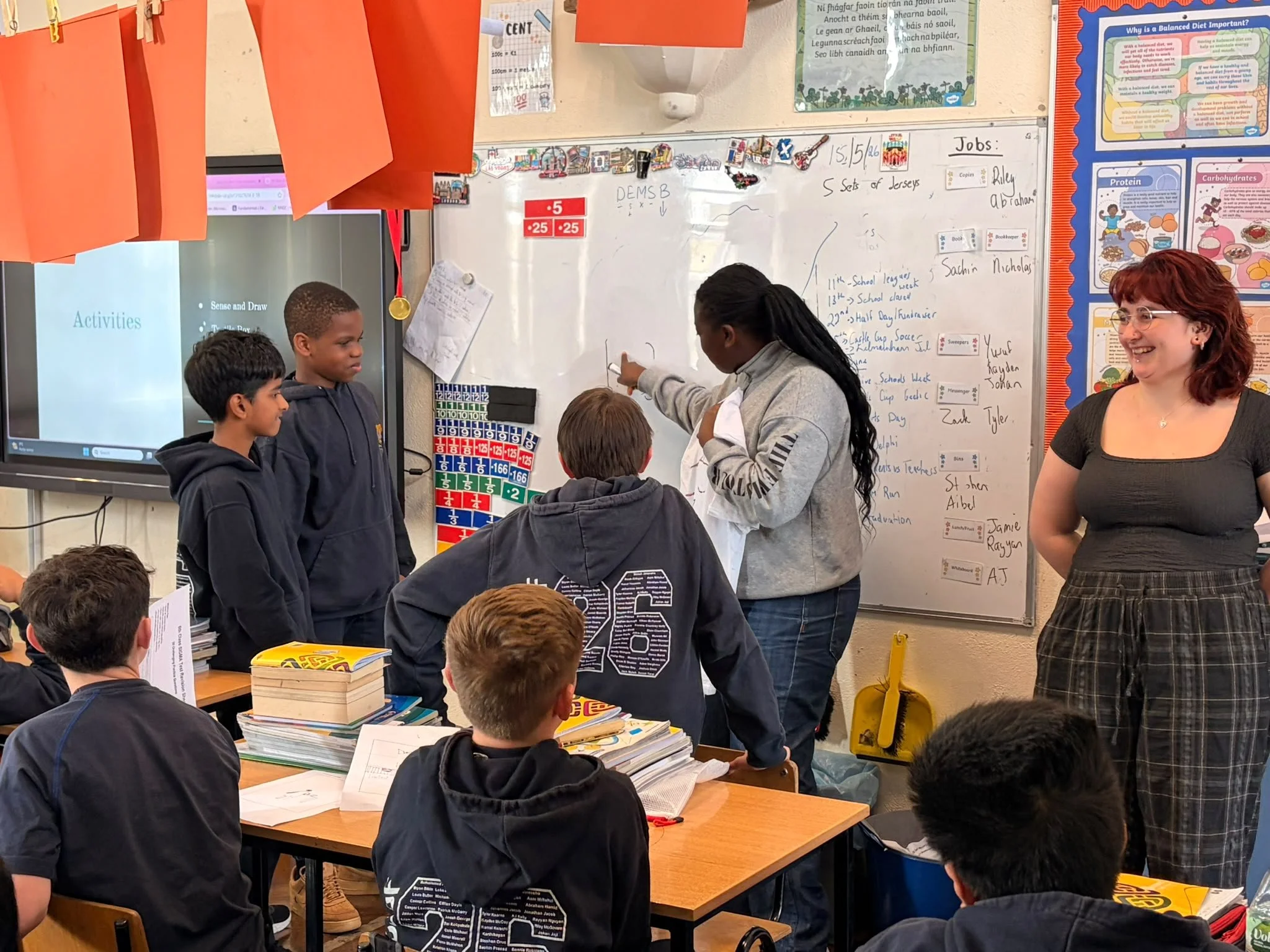
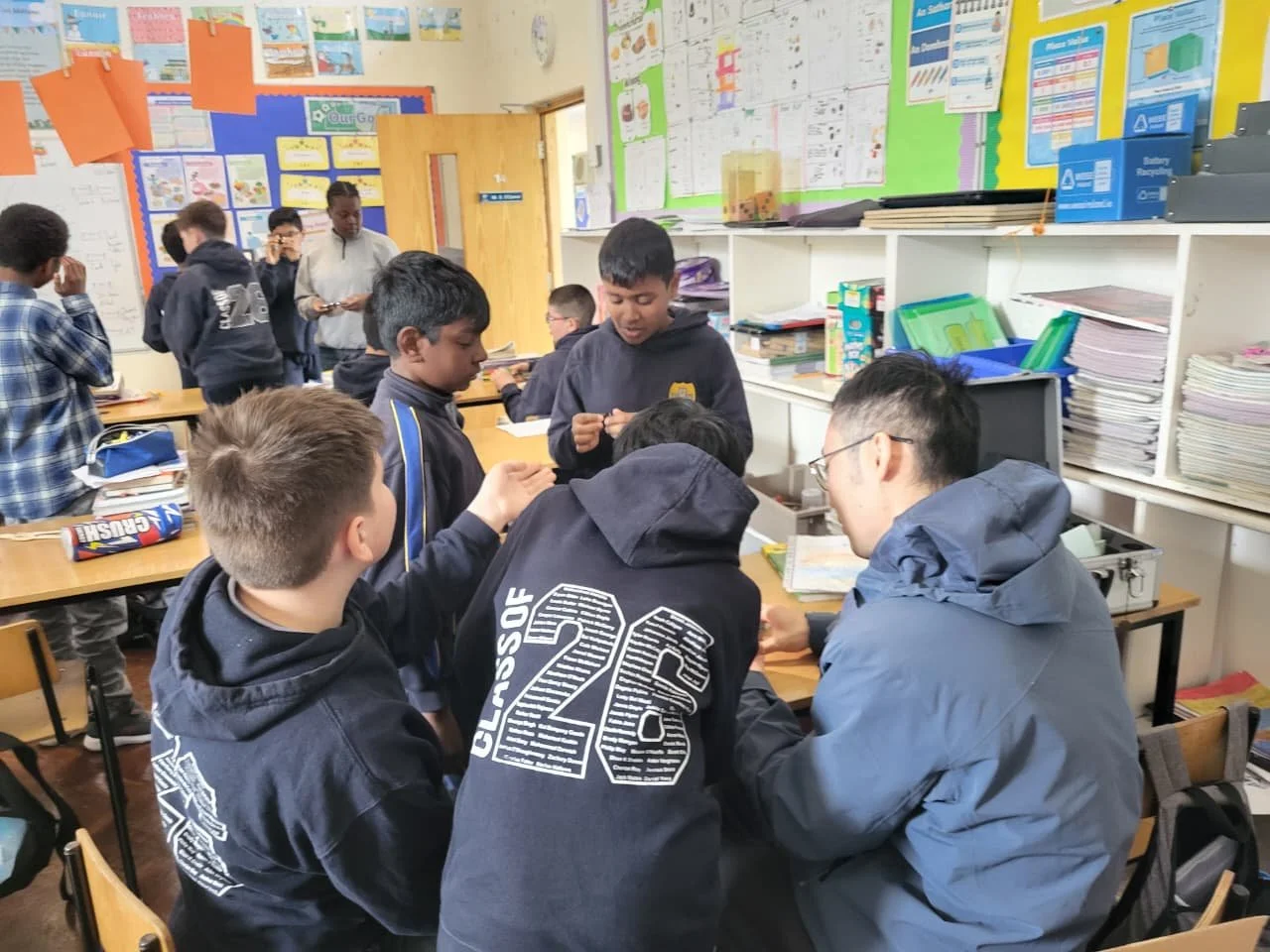
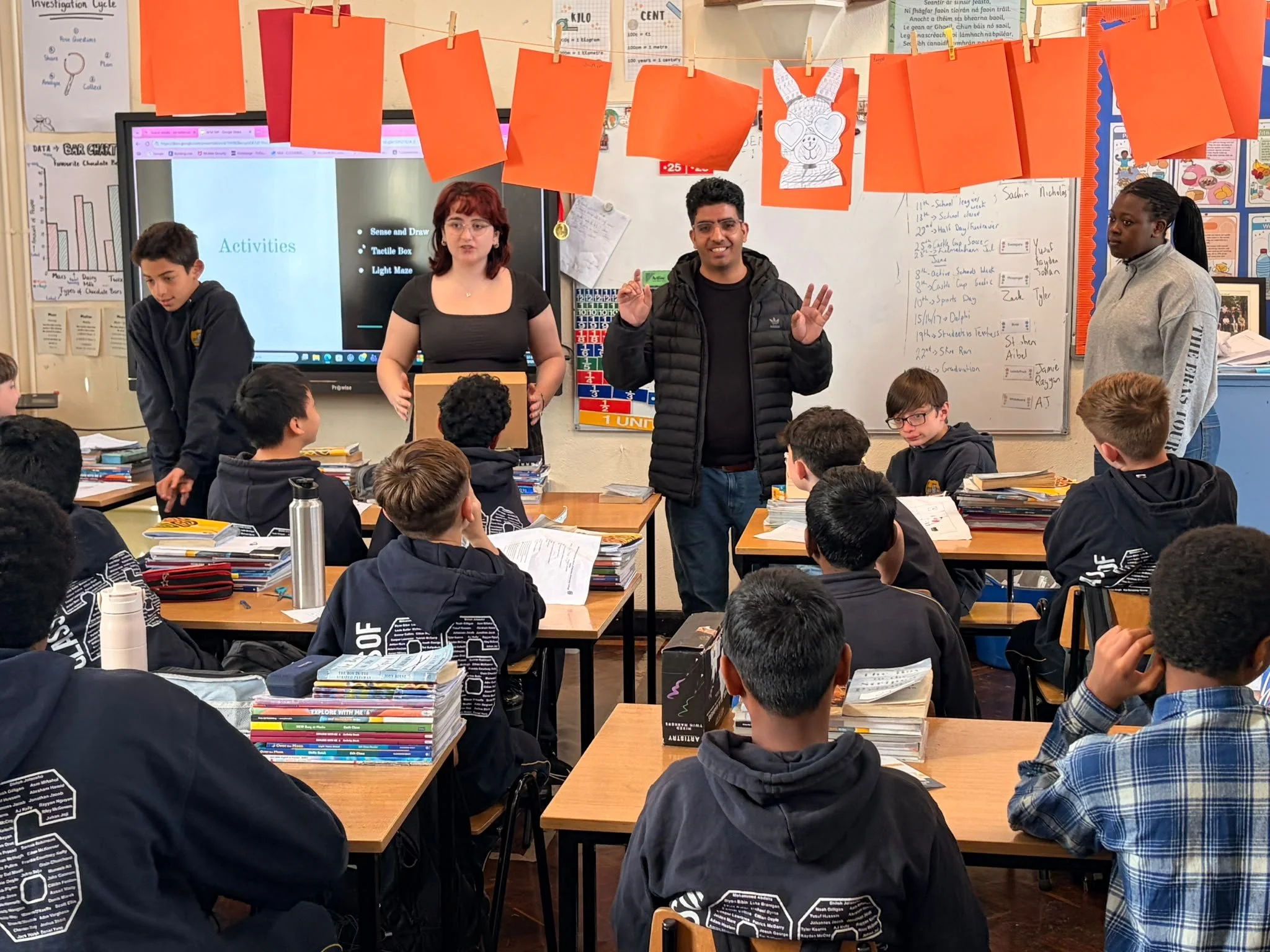
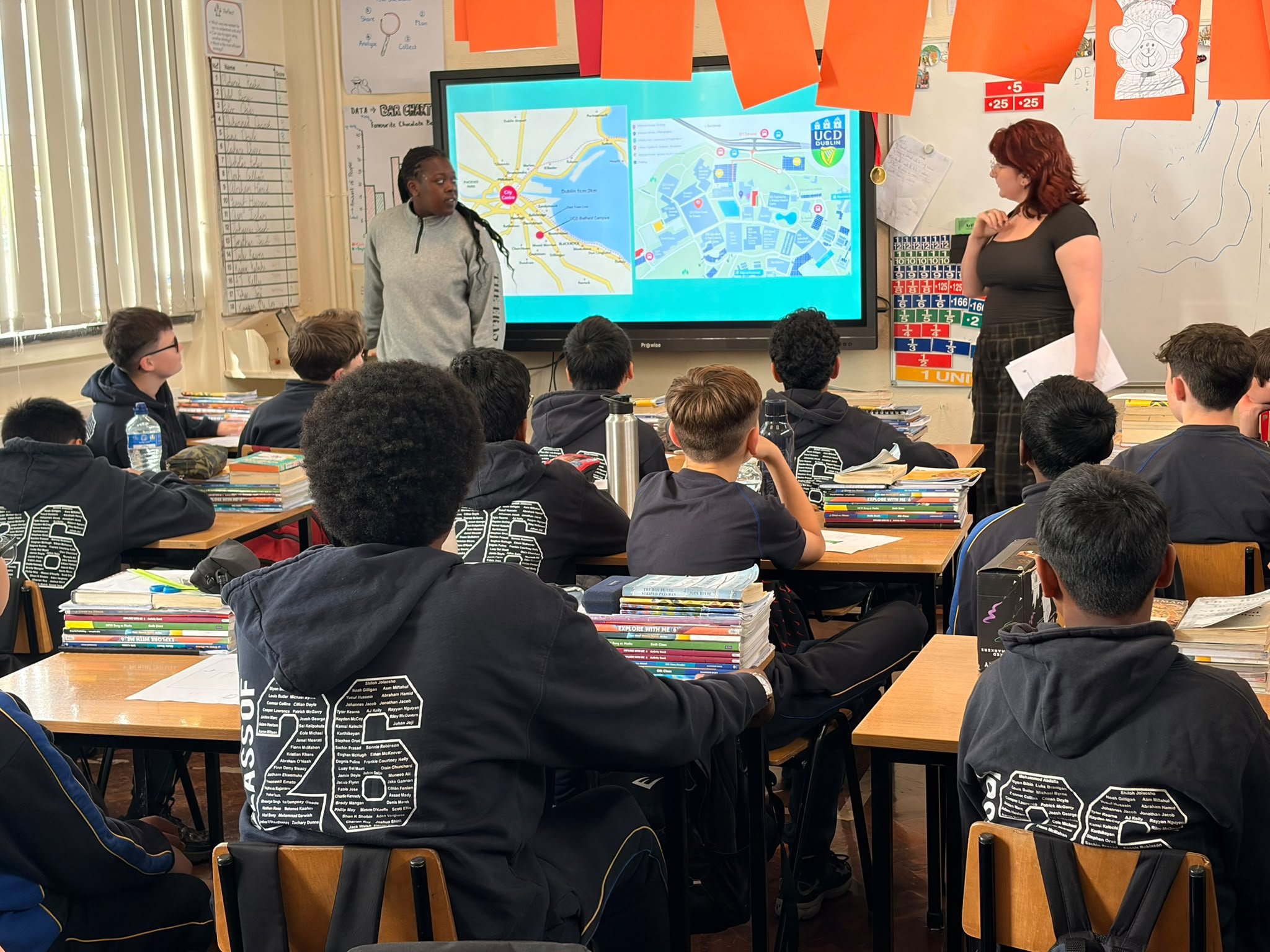
On May 18th, members of the Nanoscale Function Group had the pleasure of visiting Drimnagh Castle Boys Primary School to deliver an outreach session. We introduced the 6th class students to the world of nanoscience and the Atomic Force Microscope
The session aimed to spark curiosity and show students that science is not only exciting but that it's accessible and that it connects them to the world. We began by exploring STEM and STEAM concepts, discussing how science, technology, engineering, arts, and mathematics influence everyday life. Students were encouraged to think about the technology and innovation surrounding them and to challenge common stereotypes about who can become a scientist students.
We discussed the work done in the Nanoscale function group and introduced the students to the Atomic Force Microscope. Instead of relying on sight alone, students learned how an AFM can "feel" surfaces using an ultra-sharp tip, similar to reading braille at the nanoscale. Through interactive explanations and demonstrations, we explored how scientists can investigate structures at an atomic scale. To bring these ideas to life, students participated in several hands-on activities designed around the concept of touch and sensing. Through tactile games and challenges, they experienced how information can be gathered without relying on vision alone, mirroring the principles used in Atomic Force Microscopy.
The session also highlighted how AFM research contributes to important areas such as healthcare, renewable energy, materials science, batteries, and food technology, giving students a glimpse into how research at the nanoscale can impact society.
We would like to thank the students and staff at Drimnagh Castle Boys Primary School for their enthusiasm, engagement, and warm welcome. It was a fantastic opportunity to share our research and encourage the next generation of scientists to ask questions, stay curious, and discover that science can be for everyone. The Nanoscale Function Group looks forward to continuing its outreach efforts and creating meaningful opportunities that make science engaging, inclusive, and inspiring for future generations.